
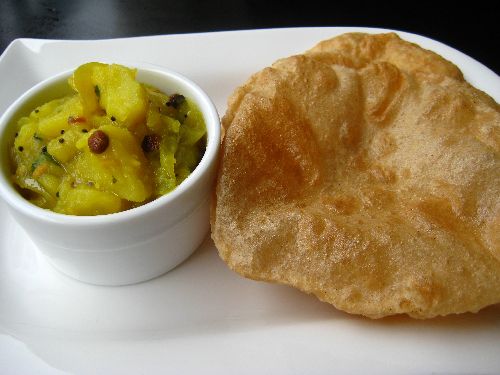
Poori with Potato Masala is a classic combination that is loved throughout Tamil Nadu. It is commonly served for breakfast, special occasions, and party meals.
I have always loved this combination. There is something irresistible about seeing a freshly fried poori puff up in the hot oil—it always tempts me to eat one or two more than I planned!
The poori is made with a simple whole-wheat dough and fried until light and puffed, while the potato masala is mildly spiced with onions, tomato, ginger, green chilies, and a traditional South Indian tempering.
Poori with Potato Masala / Poori Urulaikizhangu Masala
Recipe Details
Breakfast / Tiffin
Tamil Nadu / South Indian
Sashi
30 minutes
30 minutes
1 hour
2
The poori dough also rests for about 1 hour, which is additional to the stated preparation and cooking times.
Ingredients
For the Poori
- Whole wheat flour – 3 cups
- Fine sooji / Rava – 1 tsp
- Salt – 1/2 tsp
- Water – 1 1/2 cups, added gradually as needed
- Oil – 1 tsp, for the dough
- Oil – 2 cups, for deep frying
For the Potato Masala
- Potatoes – 3, peeled and cubed
- Water – as needed to cover the potatoes
- Salt – to taste, divided
- Oil – 1 tsp
- Mustard seeds – 1/4 tsp
- Urad dal – 1 tsp
- Chana dal – 1 tsp
- Green chilies – 5, chopped or slit
- Curry leaves – 1 sprig
- Asafoetida / Hing – a pinch
- Onion – 1 medium, chopped
- Fresh ginger – 1-inch piece, finely chopped
- Tomato – 1, chopped
- Turmeric powder – 1/2 tsp
- Gram flour / Besan – 1 tsp (optional)
- Water – 4 tbsp, for the optional gram-flour slurry
- Coriander leaves – from about 2 stalks, chopped
Prepare the Poori Dough
- Combine the whole wheat flour, fine rava, and salt in a wide mixing bowl.
- Add the water little by little and knead until a firm dough forms. Poori dough should be slightly firmer than chapati dough.
- Add 1 teaspoon oil and continue kneading until the dough becomes smooth and no dry flour remains in the bowl.
- Cover the dough and allow it to rest for about 1 hour.
- After resting, knead the dough briefly once more.
- Divide it into small portions, approximately half the size of a lemon, and roll them into smooth balls.
Roll and Fry the Poori
- Heat the oil for deep frying in a wide, deep pan over medium heat.
- Flatten one dough ball slightly with your palm.
- Roll it into a small, evenly thick circle. Poori should be slightly thicker than chapati.
- If the dough sticks while rolling, apply a tiny amount of oil rather than dusting heavily with flour.
- Prepare a few rolled pooris before beginning to fry.
- Carefully slide one poori into the hot oil.
- Once it begins to rise, gently press the surface with a slotted spoon to encourage it to puff completely.
- Flip and fry the second side briefly until lightly golden.
- Remove the poori and drain excess oil.
- Repeat with the remaining dough and serve the pooris fresh and hot.
Prepare the Potato Masala
- Peel the potatoes and cut them into small cubes.
- Add the potatoes to a pan with enough water to cover them and about 1/4 teaspoon salt.
- Cook for about 15 minutes, or until the potatoes are tender.
- Do not discard the potato cooking liquid. Keep the potatoes together with the remaining water.
- Chop the onion, tomato, green chilies, ginger, and coriander leaves.
- If using gram flour, mix 1 teaspoon gram flour with 4 tablespoons water until smooth and lump-free. Keep aside.
Cooking Instructions for Potato Masala
- Heat 1 teaspoon oil in a pan over medium heat.
- Add the mustard seeds and allow them to splutter.
- Add the urad dal and chana dal and fry briefly until they begin to turn lightly golden.
- Add the green chilies, curry leaves, and asafoetida.
- Immediately add the chopped onion and sauté until it becomes soft and translucent.
- Add the finely chopped ginger and tomato.
- Cook until the tomato becomes soft and forms a light masala.
- Add the turmeric powder and additional salt if needed.
- Fry briefly for about 1 minute.
- Add the cooked potatoes along with their reserved cooking liquid.
- Add the gram-flour slurry, if using, and mix well.
- Cook for about 5 minutes, gently breaking a few potato pieces with the spoon to help thicken the masala.
- Add the chopped coriander leaves and mix well.
- Remove from the heat once the masala reaches a soft, thick gravy consistency.
Tips for Soft and Puffy Poori
Firm Dough: Poori dough should be slightly firmer than chapati dough. Very soft dough can absorb more oil and may not puff as well.
Avoid Dusting Flour: Too much loose flour can fall into the frying oil, burn, and leave dark particles. Use a tiny amount of oil while rolling if needed.
Roll Evenly: Keep each poori evenly thick. Unevenly rolled dough may puff only in certain areas.
Keep Them Small: Rolling pooris to roughly palm size makes them easier to fry and puff evenly.
Oil Temperature: The oil should be properly hot but not smoking. If it is too cool, the poori may absorb excess oil; if it is excessively hot, the outside can brown before the inside cooks.
Serve Fresh: Poori is at its best immediately after frying while it is still puffed and light.
Tips for Potato Masala
Keep the Potato Water: The starchy cooking liquid helps give the potato masala its traditional soft consistency.
Gram Flour: The gram-flour slurry is optional but helps thicken the masala. Ground roasted chana dal can also be used as an alternative.
Coconut Milk Variation: For a richer version, add about 1/4 cup coconut milk when adding the cooked potatoes.
Consistency: Keep the masala thick enough to cling to the poori rather than making it very watery.
Serving Suggestion
Serve hot, freshly fried Poori with warm Potato Masala for a classic Tamil Nadu-style breakfast or festive meal.
Recipe Source: My Mom’s Kitchen, with tips gathered from my mom, mother-in-law, and other cooks.



Leave a Reply