
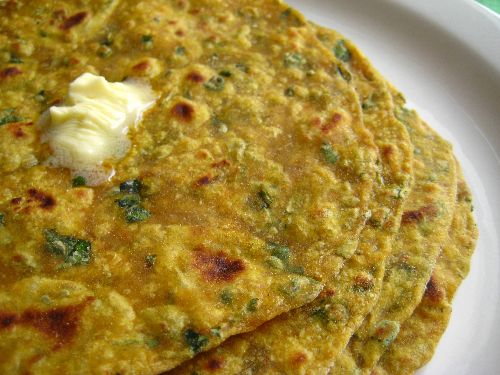
Fresh fenugreek leaves have a pleasant bitterness and a wonderful aroma that works very well in chapati dough. Adding methi to everyday dishes is also an easy way to include another leafy green in the meal.
This Vendhaya Keerai Chapati combines fresh methi leaves with wheat flour, a little gram flour, amchur, chili powder, and turmeric. It pairs especially well with potato-based curries and other simple North Indian-style side dishes.
Fenugreek Leaves Chapati / Vendhaya Keerai Chapati / Methi Chapati
Recipe Details
Indian Bread / Chapati
Indian
Sashi
10 minutes
20 minutes
30 minutes
2
Ingredients
- Wheat flour – 2 cups
- Gram flour / Besan – 1 tbsp
- Fresh methi / Fenugreek leaves – 1 bunch, about 2 cups
- Turmeric powder – 1 tsp
- Amchur powder – 2 tsp
- Red chili powder – 1/2 tsp
- Salt – 1/2 tsp, or to taste
- Water – as needed for kneading
- Oil – 2 tsp, for the dough
- Ghee – as needed (optional)
Preparation
- Separate the methi leaves from the thicker stems.
- Rinse the leaves thoroughly, drain well, and chop them finely.
- Add the wheat flour, gram flour, chopped methi leaves, turmeric powder, amchur powder, red chili powder, and salt to a mixing bowl.
- Mix the dry ingredients and methi leaves evenly.
- Add water gradually and knead into a soft, smooth dough.
- If the dough becomes sticky, sprinkle in a little additional wheat flour while kneading.
- Add a small amount of oil toward the end and knead briefly until the dough is smooth.
- Divide the dough into equal portions and shape them into balls.
- Dust lightly with flour and roll each portion into a thin chapati using a rolling pin.
Cooking Instructions
- Heat a dosa tawa or flat skillet over medium-high heat.
- Place one rolled chapati on the hot pan.
- Cook until small bubbles begin to appear and the underside develops light brown spots.
- Flip and cook the second side.
- Flip once more if needed and cook until both sides are evenly done.
- If using ghee, spread a small amount over one or both sides while the chapati is still hot.
- Remove from the pan and keep covered while cooking the remaining chapatis.
Tips
Methi Stems: Remove the thicker stems before chopping. Tender young stems are fine, but tougher stems can interfere with rolling and texture.
Dough Consistency: Methi leaves contain some moisture, so add the kneading water gradually rather than all at once.
Fresh Methi: Fresh fenugreek leaves give the chapati the best aroma and characteristic slightly bitter flavor.
Frozen Methi: Frozen methi can also be used. Thaw and squeeze out excess moisture before adding it to the dough.
Kasuri Methi: Dried kasuri methi can be used as a variation, though its flavor is more concentrated than fresh leaves, so add according to taste.
Ghee: Ghee is optional. The chapatis can be served plain or brushed lightly with ghee after cooking.
Serving Suggestion
Serve Methi Chapati hot with potato curry, aloo masala, dal, raita, or your favorite vegetable gravy.




Leave a Reply