
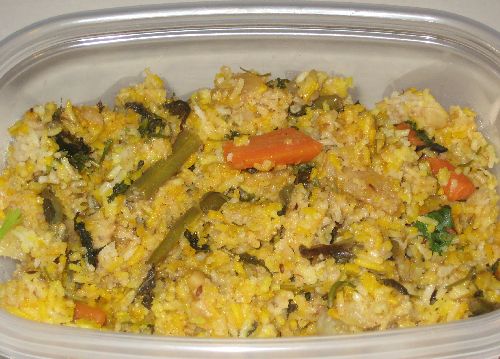
This is my dum-style Vegetable Biryani. The first time I made it, the biryani turned out a little messy because I had cooked the rice too much before layering it.
The most important lesson I learned is that the rice for dum biryani should be only partly cooked and still firm. It finishes cooking slowly with the vegetables and spices during the dum stage, giving the biryani its layered flavor and texture.
Vegetable Biryani – Method 1 (Dum Style)
Recipe Details
Rice / Main Course
Indian
Sashi
15 minutes
45 minutes
1 hour
2
Allow an additional 30–60 minutes for soaking the rice. The original recipe lists 3 cups uncooked rice for 2 servings, so the actual yield may be larger depending on portion size.
Ingredients
Main Ingredients
- Basmati rice – 3 cups
- Water – 6 cups for parboiling the rice, plus more as needed for soaking
- Oil – 4 tbsp
- Carrots – 2, cut into medium pieces
- Cauliflower – 1/2 head, cut into florets
- Potatoes – 2, cut into medium pieces
- Green chilies – 5, slit or chopped
- Ginger-garlic paste – 2 tsp
- Mint and coriander leaves – 1 cup combined, divided
- Ready-made biryani masala – 1 packet (50 g)
- Yogurt / Curd – 4 tsp, divided
- Fried onions – 1/2 cup, divided
- Cashews or other nuts – as desired
- Saffron – a pinch, optional
- Salt – 1 tsp for the rice water, plus more to taste
Whole Spices
- Cinnamon sticks – 2
- Cloves – 6, divided
- Bay leaves – 3
- Cardamom – 8 pods, divided
- Shahi jeera / Black cumin – 1 1/2 tsp, divided
Preparation
Prepare the Rice
- Rinse the basmati rice gently until the water is mostly clear.
- Soak the rice in enough water for about 30–60 minutes.
- Drain the soaked rice.
- Bring 6 cups water to a boil in a large vessel.
- Add 1 teaspoon salt, 2 cloves, 4 cardamom pods, and 1/2 teaspoon shahi jeera.
- Add the drained rice and cook for about 3–5 minutes, checking frequently.
- The rice should be only about half cooked. The grains should have started cooking but should still be quite firm in the center.
- Immediately drain the rice in a colander and spread it gently so it does not continue cooking from trapped steam.
Prepare the Vegetables
- Cut the carrots, cauliflower, and potatoes into medium-sized pieces so they cook evenly.
- Slit or chop the green chilies.
- Chop the mint and coriander leaves and divide them into two portions.
Cooking Instructions
Prepare the Vegetable Masala
- Heat the oil in a wide, heavy-bottomed pan over medium heat.
- Add the cinnamon sticks, remaining 4 cloves, remaining 4 cardamom pods, bay leaves, and remaining 1 teaspoon shahi jeera.
- Fry briefly until the spices become aromatic.
- Add the ginger-garlic paste and cook until the raw aroma disappears.
- Add the carrots, cauliflower, potatoes, and salt to taste.
- Sauté for a few minutes so the vegetables are coated with the spices.
- Add 1/2 cup of the chopped mint and coriander leaves, the green chilies, and the biryani masala.
- Mix well and cook for a few minutes.
- Add 3 teaspoons yogurt and mix gently.
- Cover and cook until the vegetables are approximately 70% cooked. They should still be slightly firm because they will continue cooking during dum.
- If the masala becomes too dry before the vegetables are partly cooked, sprinkle in a little water only as needed.
Layer the Biryani
- Use a heavy-bottomed pot with a tight-fitting lid for the dum stage.
- Take half of the cooked vegetable mixture and keep it aside.
- Leave the remaining half in the bottom of the pot.
- Add the remaining 1 teaspoon yogurt and the cashews or other nuts and gently mix with the bottom vegetable layer.
- Add a little salt if needed.
- Sprinkle 1/4 cup fried onions over the vegetables.
- Spread half of the parboiled rice evenly over the vegetables without pressing it down.
- Add the reserved vegetable mixture as the next layer.
- Sprinkle the remaining 1/4 cup fried onions and some of the reserved mint and coriander leaves over the vegetables.
- Add the remaining rice as the final layer.
- Finish with the remaining mint and coriander leaves.
- If using saffron, dissolve the pinch of saffron in a little warm water and drizzle it over the top of the rice.
Dum Cooking
- Cover the pot tightly with its lid.
- Place a heavy tawa or flat griddle over low heat and place the biryani pot on top. This provides gentler indirect heat and helps prevent the bottom layer from burning.
- Cook on low heat for about 20–25 minutes, or until the rice is fully cooked and the vegetables are tender.
- Turn off the heat and leave the pot covered for another 10 minutes.
- Open the lid and gently lift and fold the biryani from the sides with a wide spoon.
- Avoid vigorous mixing, which can break the rice grains and destroy the layered texture.
Tips
Do Not Fully Cook the Rice: This is the most important step for dum biryani. The rice should be only partly cooked before layering. If it is already soft before dum cooking, the finished biryani can become mushy.
Drain Immediately: Once the rice reaches the desired half-cooked stage, drain it right away so it does not continue cooking in the hot water.
Vegetables: Cook the vegetables only about 70% before layering. They will finish cooking along with the rice during dum.
Biryani Masala: Ready-made masala packets vary considerably in strength and saltiness. A 50 g packet can be quite strong, so taste the vegetable masala and adjust according to the brand you use.
Layer Gently: Do not press the rice down while layering. Keeping the layers loose allows steam to circulate through the biryani.
Dum Cooking: Gentle, indirect heat is better than keeping a pressure cooker under pressure for a long period. A tightly covered heavy-bottomed pot placed over a tawa works well.
Rest Before Mixing: Let the biryani rest covered for about 10 minutes after cooking. This allows the grains to settle and makes them less likely to break.
Serving Suggestion
Serve Vegetable Dum Biryani hot with onion raita, cucumber raita, plain curd, or a simple vegetable salad.
Recipe Source: Adapted from Vahrehvah.






Leave a Reply