
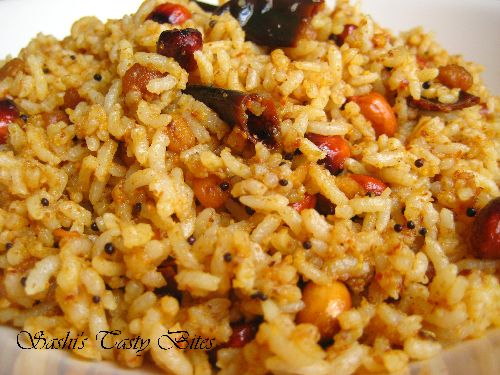
I have always loved the Puliyodharai served at temples and wanted to recreate that special flavor at home. This is the closest version I have made to the temple-style tamarind rice I enjoy so much.
For me, the freshly roasted masala powder and crunchy peanuts make all the difference. We did not usually add this podi at home, but I like the extra aroma and depth of flavor it gives the rice.
Tamarind Rice / Iyengar Kovil Puliyodharai / Puli Sadam
Recipe Details
Variety Rice
Tamil Nadu / South Indian
Sashi
Ingredients
Main Ingredients
- Cooked rice – 4 cups, cooled
- Tamarind – 1 large lemon-sized ball
- Water – as needed to prepare 1–1 1/2 cups thick tamarind extract
- Sesame oil – 4 tbsp
- Mustard seeds – 1/4 tsp
- Chana dal – 1 tsp
- Asafoetida / Hing – a pinch
- Dried red chilies – 7
- Curry leaves – 1 sprig
- Peanuts – 1/2 cup
- Turmeric powder – 1 tsp
- Salt – to taste
To Roast and Grind
- Dried red chilies – 5
- Chana dal – 2 tsp
- Coriander seeds – 2 tsp
- Fenugreek seeds – 1/4 tsp
- Sesame seeds – 1 tbsp
- Oil – 1 tsp, for roasting
Preparation
- Soak the tamarind in warm water until softened.
- Squeeze well and strain to prepare about 1–1 1/2 cups of thick tamarind extract. Keep aside.
- Spread the cooked rice on a wide plate and allow it to cool so the grains remain separate.
- Heat a little oil in a small pan over low to medium heat.
- Add the dried red chilies, chana dal, coriander seeds, fenugreek seeds, and sesame seeds listed under “To Roast and Grind.”
- Roast until the dal and spices become aromatic and lightly golden and the sesame seeds begin to crackle.
- Remove from the heat and allow the mixture to cool completely.
- Grind into a fine powder and keep aside.
Cooking Instructions
- Heat the sesame oil in a heavy-bottomed pan over medium heat.
- Add the mustard seeds and allow them to splutter.
- Add the chana dal, asafoetida, dried red chilies, peanuts, and curry leaves.
- Fry for about 1 minute, until the peanuts become aromatic and the chana dal begins to turn golden.
- If you prefer the peanuts to remain especially crunchy, remove them at this stage and keep them aside.
- Pour in the prepared tamarind extract.
- Add the turmeric powder and salt.
- Cook over medium heat, stirring frequently, until the raw tamarind aroma mellows and the mixture reduces to a thick, concentrated paste.
- Continue cooking until the sesame oil begins to separate around the edges. Depending on the tamarind and pan, this may take about 20–30 minutes.
- Add 2 teaspoons of the freshly ground masala powder and mix well.
- Cook over low heat for about 5 minutes.
- Taste the tamarind mixture and add a little more of the ground masala powder if you prefer a stronger flavor.
- Reduce the heat to low and add the cooled cooked rice.
- Gently fold the rice into the tamarind mixture until every grain is evenly coated.
- If you removed the peanuts earlier, add them back now and mix gently.
- Taste and adjust the salt and ground masala powder if needed.
- Remove from the heat and allow the Puliyodharai to rest for about 30 minutes before serving so the rice can absorb the flavors.
Tips
Freshly Ground Podi: The roasted red chili, coriander, fenugreek, sesame, and chana dal powder gives this Puliyodharai its distinctive aroma. Start with 2 teaspoons and add more only after tasting.
Peanuts: Roasted peanuts add both flavor and crunch. Removing them after tempering and adding them back with the rice helps preserve more of their crisp texture.
Tamarind Paste: Cook the tamarind mixture until it becomes thick and concentrated and the sesame oil begins to separate. This helps the flavor coat the rice without making it soggy.
Use Cooled Rice: Cool the cooked rice before mixing so the grains stay separate and do not become mashed.
Rest Before Serving: Allowing the mixed rice to sit for about 30 minutes gives the tamarind and spice flavors time to settle into the rice.
Cashew Variation: Cashews can also be fried and added along with or instead of some of the peanuts for a richer variation.
Extra Masala Powder: Any leftover roasted podi can be cooled completely and stored in a clean, airtight container. Refrigerate for longer storage and use while it still smells fresh and aromatic.
Serving Suggestion
Serve Kovil Puliyodharai with appalam / papad, vadam, or a simple curd-based side dish.




Leave a Reply